Resilience, Empowerment and Active Leadership
Resilience Across Borders: 15 European Stories Worth Reading
Read the article in Norwegian, English, German, Croatian, French or with speed reading.





What do a flea market in Split, a solar-panel effort on the Irish coast and a volunteer centre in Magdeburg have in common?
Each in its own way, they show how ordinary people build communities that can withstand more. Now they have been gathered between two covers. The REAL project has just published a new best-practice handbook – "Resilience Across Borders" – featuring 15 stories from six European countries about how volunteering, cooperation and local engagement make communities more resilient. Not only when a crisis hits, but in the everyday life that comes before it.
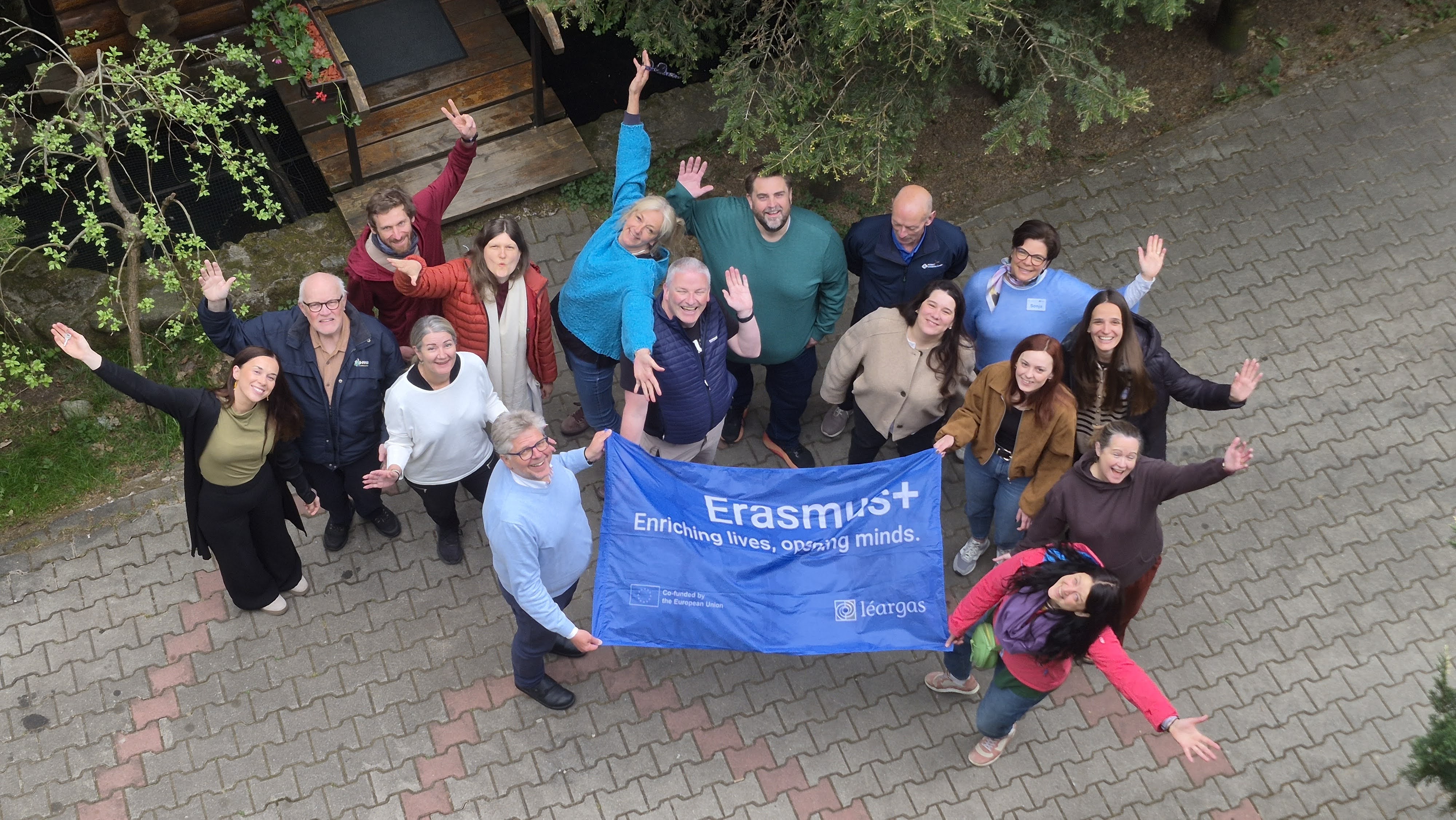
The handbook was developed within the Erasmus+ project REAL – Resilience, Empowerment and Active Leadership – in which Vestre Aker Frivilligsentral is the Norwegian partner, alongside organisations from Ireland, Romania, Germany, Croatia and Belgium. The stories are grouped into three themes: environmental sustainability, social inclusion and solidarity, and crisis preparedness. Here are a few tasters.
Environment: growing, sharing and repairing together
In the Irish coastal town of Kinsale you will find the world's very first "Transition Town". What began as a permaculture course some 20 years ago has grown into a seed library at the local library, a €90,000 community garden, solar projects that neighbours pursue together, and a dedicated coffee-cup recycling scheme. This is preparedness in practice – not because it is written in an emergency plan, but because people are learning to grow, share and repair together.
Further southeast in Europe, the mobility network CIVINET connects more than 230 cities and organisations across six countries to make transport greener and cities more liveable. And in Cluj-Napoca, Romania, Cami Gui launched the Sustainable Cluj movement in the middle of the pandemic – without a finished strategy, but with a simple idea: "I just wanted to bring together people who care and see what comes of it."
Solidarity: no one left behind
Every December since the year 2000, the humanitarian flea market "A di si ti?!" fills the streets of Split, Croatia. Thousands of residents, schoolchildren, artists and businesses donate, sell and raise funds for the city's homeless. People sign up months in advance – the market has become part of the city's identity and proof of how far solidarity can carry.
Norway is here too. The handbook tells the story of the Norwegian Women's Public Health Association, which for more than 130 years has built preparedness through care, health work and local organising, and of the "Ja til eldre" think tank at Bogstad. The latter reminds us of something important: older people are not merely a group for society to look after. They are also a resource, with experience, networks and judgement that the community needs.
Crisis preparedness: what is built quietly
From Ireland comes a story that stays with you: a teacher who had just attended a Red Cross first aid course used what she learned that very evening to save her own child while waiting for the ambulance. The Irish Red Cross strengthens 72 local branches across the country through exactly this kind of everyday preparedness – training, trust and people who know their own neighbourhood.
In Magdeburg, Germany, the volunteer centre has been present in every single crisis since 2005 – from the 2015 refugee situation to floods and the war in Ukraine. The secret is not to take over the job of the emergency services, but to be a neutral hub that connects spontaneous volunteers to real needs. On one occasion they received a large donation of suitcases from Aldi, for people who had fled their homes.
And from the Norwegian Red Cross in Vestfold comes perhaps the most important sentence in the entire handbook: resilience is built before the crisis, not during it.
No single answer – but twelve good pieces of advice
The handbook offers no ready-made recipe that fits everywhere. Instead it closes with twelve concrete recommendations drawn from the organisations' own experience: start by listening to the community's needs, build on local ownership, secure funding from several sources, look after your volunteers, cooperate across sectors – and prepare for crises through what you do in everyday life.
Together, the 15 stories paint a picture of a Europe where resilience is not one big plan, but many small actions put into a system over time. It is easy to recognise yourself in them – and easy to be inspired.
The 15 stories are worth reading in full. Download the complete handbook "Resilience Across Borders" here.